
High-Power DC & Commercial Smart Charging Lines
Factory-direct OEM/ODM fast-charging piles, dual-gun floor units, and intelligent advertising systems certified for global utility networks.






Global Technological Shift in Electric Vehicle Supply Equipment (EVSE)
The electric vehicle charging system industry has transitioned decisively from commoditized Level 2 AC hardware into sophisticated, software-defined energy ecosystems. For utility directors, Charge Point Operators (CPOs), and Tier-1 automotive groups, partnering with an agile OEM factory represents the single most crucial lever to preserve margin and secure field longevity.
Silicon Carbide (SiC) & 1000V Topologies
Next-generation passenger and commercial electric vehicles are migrating from 400V architectures to native 800V and 1000V high-voltage platforms. Traditional silicon IGBT modules exhibit high switching losses under ultra-fast demands. Modern OEM charging system factories deploy wide-bandgap Silicon Carbide (SiC) power switching modules, achieving ultra-high conversion efficiencies in excess of 96.5%, dramatically reducing thermal waste dissipation and cabinet footprint.
Dynamic Matrix Power Sharing
Static power allocation leads to severe grid stranded capacity. For commercial depot applications, leading manufacturers implement matrix dynamic power-sharing topologies. In a split-type system spanning 360kW to 720kW across 8 to 12 charging dispensers, power routing is handled in real-time increments of 20kW/30kW/40kW modules, continuously balancing charging curves across vehicle battery states of health (SoH).
ISO 15118 & OCPP 2.0.1 Compliance
Global procurement directives now mandate native ISO 15118-2/20 Plug & Charge protocols, biometric encryption, and OCPP 2.0.1 interoperability. Charging sessions initialize seamlessly through encrypted cryptographic handshakes without physical cards or mobile applications, eliminating driver friction while enabling bidirectional smart charging (V2G/V2X) and real-time revenue settlement.
China Factory 4.0: Supply Chain Resilience, Scaled Efficiency & Vertical Integration
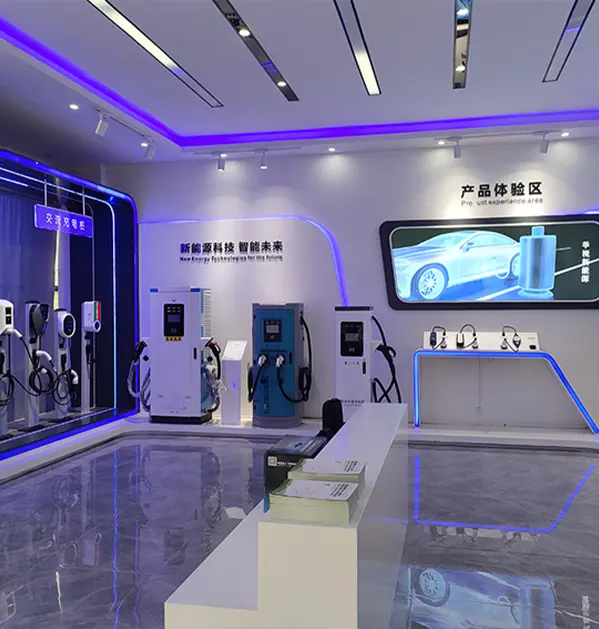
Navigating geopolitical supply chain volatility requires deep vertical integration rather than surface-level white-label assembly. Suzhou HizonSun Tech Co., Ltd. operates an advanced 10,000 m² smart manufacturing plant situated in the high-tech industrial cluster of Kunshan, Jiangsu Province, directly adjacent to the premier Yangtze River Delta electronics and automotive supply corridor.
Unlike regional integrators that outsource critical sub-assemblies, our facility maintains end-to-end proprietary control over core high-frequency planar transformer winding, robotic SMT PCB assembly, embedded firmware flashing, robotic CNC sheet-metal enclosure pressing, and climate-controlled stress ageing.
This concentrated ecosystem translates directly into unrivaled procurement advantages for international brand partners: shorter product development cadences, customized enclosure aesthetics, rapid firmware adaptations to regional energy grids, and a sustained 25–40% Bill-of-Materials (BOM) cost efficiency relative to fragmented Western assemblers.
Global Procurement Requirements Across Major EV Markets
Regulatory divergence dictates EVSE hardware specifications. As an established OEM/ODM exporter, HizonSun engineers charging architectures tailored to regional standardization mandates.
European Union (AFIR)
Under the Alternative Fuels Infrastructure Regulation (AFIR), installations mandate ad-hoc payment interfaces (credit card POS terminals), clear pricing transparency displays, and CCS Combo 2 connectors with IP54 outdoor rating and MID-certified energy metering.
North America (NEVI & NACS)
Deployment in North American highway corridors demands UL 2202 and UL 2594 listings, OCPP 2.0.1 cybersecurity protection, and rapid dual-standard support: CCS Type 1 combined with native SAE J3400 (NACS - North American Charging Standard) couplers.
Southeast Asia & ASEAN
Fast-growing markets such as Thailand (EV3.5 subsidies), Indonesia, and Vietnam demand resilient dual-gun DC chargers (60kW–180kW) capable of withstanding extreme ambient temperatures, humidity, and volatile grid voltage fluctuations via broad 200V–1000V output.
Latin America & Emerging
Countries including Brazil and Chile have adopted European CE and CCS2 frameworks for public transport and urban commercial centers, prioritizing modular cabinet designs that enable scalable power upgrades from 60kW up to 360kW without full civil re-excavation.
Localized Engineering Blueprints for Real-World Deployments
Procurement efficiency hinges on matching charging topology precisely to vehicle dwell time, electrical substation headroom, and financial return horizons.
| Deployment Scenario | Recommended System Topology | Power Class (kW) | Connector Standards | Key Hardware Features | Business Monetization |
|---|---|---|---|---|---|
| Highway Fast-Corridors | Octagonal Heavy-Duty Integrated DC Pile | 120kW – 360kW | Dual CCS2 / Dual NACS | Liquid-cooling option, 7" sunlight-readable LCD, IP55 | High kWh tariff, quick turnover (<25 min dwell) |
| Fleet & Bus Transit Depots | Split-Type Matrix DC Charging Hub | 360kW – 720kW | 8 to 12 Dispensers (CCS2/GB-T) | Dynamic module switching, overnight scheduled charging | Fleet TCO optimization, peak load peak-shaving |
| Retail & Mixed-Use Complexes | All-in-One Commercial Advertising DC Charger | 60kW – 240kW | Dual Gun (CCS2 / Type 2) | Integrated 32" HD High-Bright Outdoor Advertising Screen | Dual revenue: Electric charging margin + digital ad revenue |
| Workplaces, Hotels & Condos | EV-ONE Smart Commercial AC Wallbox | 7kW – 22kW (Level 2) | Type 2 / Type 1 / GB-T | OCPP 1.6J/2.0.1, RFID reader, Dynamic Load Management (DLM) | Amenity offering, tenant billing, prolonged dwell times |
| Weak Grid & Remote Islands | BESS Energy Storage Integrated DC Charging Pile | 100kWh – 200kWh LFP + 60–160kW DC | Dual CCS2 / CCS1 | Integrated Tier-1 CATL/EVE LFP Cells, Solar PV DC coupling | Tariff arbitrage, zero costly transformer grid upgrades |
Enterprise OEM/ODM Customization Workflow
From initial industrial styling and thermal modeling to full turnkey homologation, our engineering team guides global brands through every deployment milestone.
Product Spec & Styling
Collaborative definition of industrial cabinet aesthetics, structural anti-vandalism levels (IK10), ingress protection ratings (IP54/IP55), brand pantone matching, and customized gun holster configurations.
Electrical Architecture
Selection of high-efficiency rectifier modules, PCB controller layout, customized contactors, circuit breaker coordination, and dynamic power management firmware tailored to specific utility grids.
Firmware & Cloud Integration
Native integration of the client's preferred OCPP 1.6J or OCPP 2.0.1 backend, local billing gateway APIs, RFID authorization cards, iOS/Android mobile application branding, and OTA remote update servers.
Certification & Scaling
Witnessed regulatory testing support (CE, CB, UL, FCC, CQC), complete technical documentation compilation, environmental salt-spray and thermal endurance validation, followed by volume production.
Frequently Asked Questions by Global EVSE Procurement Teams
Direct, highly authoritative answers from our senior chief engineering and export compliance group.
What specific electrical charging standards and connector protocols does HizonSun manufacture?
HizonSun designs and manufactures electric vehicle charging systems conforming strictly to international electrotechnical standards: European IEC 61851 / IEC 62196 (CCS Combo 2, Type 2 AC), North American UL 2202 / UL 2594 / SAE J1772 / SAE J3400 (CCS Type 1 and NACS), and Chinese National Standards GB/T 20234 and GB/T 18487. Depending on your target geographic market, dual-gun and multi-terminal systems can be configured with heterogeneous plug options to service cross-border fleet corridors without intermediary adapters.
How does a factory-integrated BESS energy storage charging pile eliminate grid expansion constraints?
Our 100kWh and 200kWh Energy Storage Integrated Charging Piles integrate Tier-1 Lithium Iron Phosphate (LFP) prismatic cell packs, an intelligent Battery Management System (BMS), a bidirectional Power Conversion System (PCS), and a high-power DC fast-charging dispenser within a unified outdoor-rated cabinet. When grid infrastructure is constrained (e.g., an existing commercial building limited to a 40kVA feed), the BESS continuously trickles charge from the grid during off-peak windows or absorbs on-site rooftop Solar PV. When an EV initiates a fast-charge session, the battery pack discharges at high C-rates, delivering 120kW–180kW burst charging to the vehicle without tripping utility breakers or incurring exorbitant grid transformer upgrade capital expenditures.
What firmware protocols are utilized for central management platform connectivity?
All HizonSun commercial AC and DC charging stations run embedded software natively compliant with the Open Charge Point Protocol (OCPP) 1.6 JSON and OCPP 2.0.1. This ensures universal compatibility with leading global Charge Point Operator (CPO) software platforms such as Driivz, AMPECO, ChargeLab, and GreenFlux. Furthermore, HizonSun holds independent software copyrights for our proprietary Cloud Management Platform, allowing clients without existing backends to manage billing, load scheduling, real-time diagnostic telemetry, and remote Over-The-Air (OTA) firmware patches from day one.
What testing protocols and factory quality verifications are conducted prior to overseas dispatch?
Quality assurance at our Kunshan facility encompasses a rigorous multi-stage testing matrix: automated SMT optical inspection (AOI), high-voltage dielectric withstand tests, insulation resistance checks, EMC electromagnetic compatibility screening, IP54/IP55 water-spray ingress validation, and a mandatory continuous 8-hour 100% full-load burn-in cycle using programmable DC electronic regenerative loads. Every individual charging pile is assigned an indelible serialized manufacturing passport containing complete component traceability.
What is the minimum order quantity (MOQ) and lead time for OEM branded charging stations?
For standard models requiring custom exterior paint, screen user interface (UI) branding, and customized vinyl decals, our typical MOQ is as accessible as 5 to 10 units for high-power DC fast chargers and 50 units for AC wallboxes. For completely custom mechanical sheet-metal chassis engineering or specialized motherboard customizations, prototype verification cycles average 25–35 days, with scaled series manufacturing completed within 3 to 4 weeks following design freeze.
How does the 32-inch advertising DC charging pile generate alternative revenue streams for commercial CPOs?
Commercial shopping centers and highway service plazas often experience slow payback periods when relying solely on electricity resale markups. Our OEM 32-inch advertising DC fast charger combines 60kW–240kW dual-gun charging with an industrial-grade, 2500-nit high-brightness, anti-glare, weather-sealed LCD screen. Operators can program remote digital out-of-home (DOOH) promotional content, merchant advertisements, and municipal announcements via 4G/WiFi cloud content management systems (CMS), effectively creating a high-margin recurring advertising business model while vehicles charge.
Split-Type Mega Systems, Storage Piles & Destination AC Units
Explore our specialized heavy-duty depot charging systems, battery-buffered energy storage piles, and flexible Level 2 destination chargers.



Empowering the Global Transition to Electrified Mobility
Whether you are engineering a multi-megawatt transit charging hub in Europe, rolling out national fast-charging networks across the Americas, or expanding commercial destination infrastructure in Southeast Asia, our manufacturing plant provides the precision engineering, industrial resilience, and competitive supply chain strength required for long-term commercial dominance.