
Engineered Charging Equipment & Stations
Factory-direct electric vehicle supply equipment (EVSE) engineered for heavy-duty commercial deployment, turnkey CPO operations, and grid-buffered charging terminals.






Macro-Scale Charging Network Architecture & Grid Synergy
De-risking capital expenditure through modular power matrixing, intelligent dynamic load balancing, and battery-buffered decentralized charging nodes.
Grid Interconnection Optimization & Dynamic Allocation
Conventional public charging deployments face extreme delays and exorbitant capital requirements due to medium-voltage upstream grid reinforcement costs. Our intelligent split-type DC charging matrix decoupling architecture solves this through matrix-switched silicon carbide (SiC) power modules.
By dynamically allocating power in granular 20kW or 30kW increments across up to 12 charging dispensers, network operators eliminate stranded power capacity, maintaining concurrent high utilization without exceeding localized distribution substation thresholds.
Battery Energy Storage (BESS) Integrated Peak Shaving
For logistics hubs, highway service areas, and islands with constrained distribution transformers, our integrated 100kWh and 200kWh lithium iron phosphate (LFP) energy storage charging piles serve as active buffer reservoirs.
They absorb power during nocturnal low-tariff periods or direct solar PV generation, discharging during high-rate peak demand spikes. This architecture bypasses expensive utility interconnect approvals while protecting CPOs from exorbitant demand penalties.
Protocol Agility: OCPP 2.0.1, ISO 15118 & V2G Readiness
The modernization of charging networks hinges on bi-directional interoperability. All HizonSun charging equipment incorporates native OCPP 1.6J and OCPP 2.0.1 JSON protocol stacks, engineered alongside integrated cryptographic hardware to satisfy ISO 15118-2 and ISO 15118-20 Plug & Charge standards.
This ensures automated cryptographic TLS handshake authentication, dynamic pricing tariff negotiation, and seamless forward compatibility with emerging vehicle-to-grid (V2G) grid-balancing incentive programs worldwide.
Architectural Advantage: HizonSun vertical integration couples digital telemetry, internal power converter topology, and industrial mechanical enclosures, reducing unscheduled station downtime to less than 0.8% across mission-critical networks.
Navigating Global Standards & Market Imperatives
Tailored engineering adaptations satisfying European AFIR directives, North American NEVI reliability quotas, and emerging Latin American & Southeast Asian infrastructure buildouts.
European Union: AFIR Compliance & Eichrecht Calibration
European charge point operators face stringent mandates under the Alternative Fuels Infrastructure Regulation (AFIR), mandating ad-hoc payment interfaces and transparent per-kWh metering.
HizonSun equips our 60kW–360kW DC chargers and 22kW AC posts with MID-certified DC meters, integrated secure POS terminal integrations, and German Eichrecht-compliant cryptographic display signatures, ensuring that all metered billing data is tamper-proof and verifiable directly at the terminal screen.
North America: UL Standards & NACS Integration
Expanding into the North American corridor requires stringent UL 2202, UL 2594, and UL 991 functional safety validations alongside ADA-compliant dispenser physical dimensions.
With the rapid standardization of SAE J3400 (North American Charging Standard / NACS), our engineering lines manufacture dual-cable dispensers equipped with liquid-cooled or boost-rated CCS1 and NACS couplers, providing operators complete asset future-proofing as legacy vehicle architectures transition.
APAC & Emerging Markets: Tropicalized Durability
Deployments across Southeast Asia (Thailand, Vietnam, Indonesia) and Latin America (Brazil, Chile) contend with high ambient temperatures, sustained humidity, and extreme grid voltage fluctuations.
Our export chargers integrate conformal PCB coatings, isolated heat-sink duct channels, and heavy-duty IP54/IP55 industrial cabinets with anti-corrosion C4/C5 surface treatments, ensuring trouble-free outdoor operations across extreme climate categories.
Application Architectures by Operating Environment
Engineering the ideal balance of dwell time, charging power density, civil installation footprint, and commercial monetization.
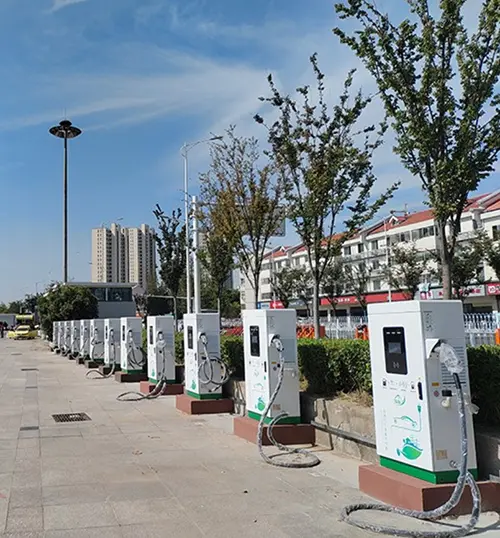
Ultra-Fast High-Throughput Hubs
Targeting 15 to 30-minute vehicle turnaround. Integrated 180kW–360kW DC fast chargers equipped with dual CCS2 liquid-cooled guns deliver rapid top-ups, supported by robust automated POS credit card terminals for friction-free cross-border roaming.
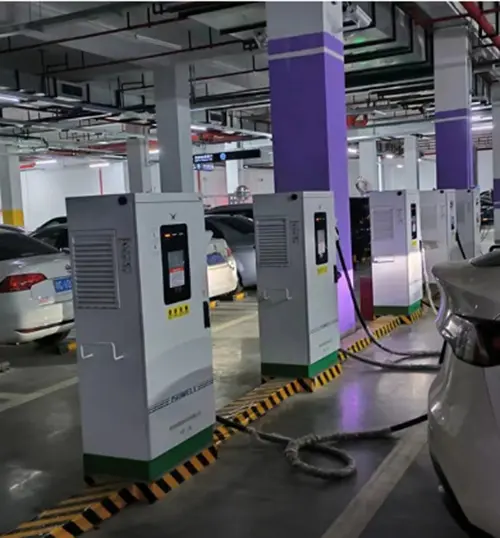
Advertising & Retail Monetization
Our 60kW–240kW DC charging stations with integrated 32-inch high-definition digital signage screens bridge the gap between energy delivery and ad revenue generation, shortening site capital payback cycles by up to 40% in shopping centers.
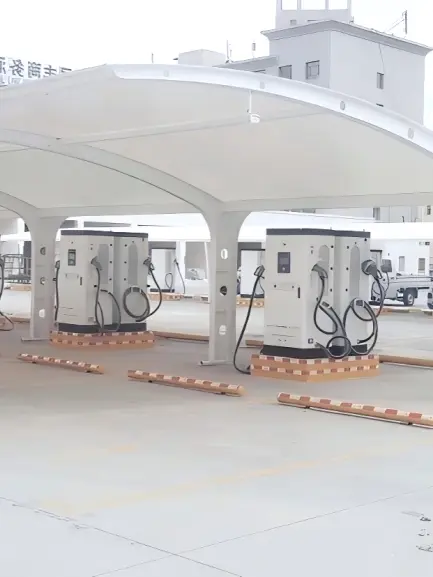
Split-Type Power Dispatch Systems
Centrally situated 360kW–720kW power conversion cabinets feeding 8 to 12 charging dispenser pedestals. Dynamic power sharing guarantees that overnight depot charging maximizes vehicle readiness while optimizing utility connection tariffs.
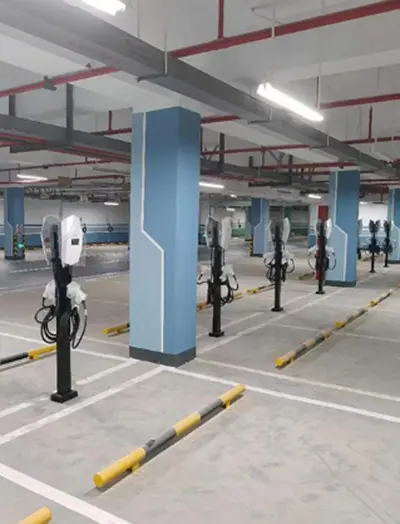
Smart Destination Level-2 Charging
Compact 7kW–22kW EV-ONE AC wallbox and pedestal systems. Incorporating RFID user authorization, dynamic phase switching, and master-slave local load balancing to charge fleets of vehicles over extended 4–8 hour dwell sessions safely.
Vertical Manufacturing Authority & Scale
Engineered in-house at our Kunshan manufacturing campus. Suzhou HizonSun Tech Co., Ltd. controls 100% of the manufacturing lifecycle—from precision PCB surface mounting to burn-in full-load stress testing.
End-to-End ODM / OEM Turnkey Engineering
We provide comprehensive custom engineering services for global charge point operators, electric vehicle manufacturers, and international brand distributors. Our capabilities encompass customized sheet metal enclosure engineering, personalized touchscreen GUI software, embedded OCPP middleware tailoring, and bespoke power-module stacking.
Automotive-Grade Quality Verification
Operating under strict ISO 9001 quality management procedures, every charging pile undergoes full functional validation, insulation resistance tests, leakage current screenings, and continuous 48-hour full-load thermal burn-in stress cycles inside controlled environmental chambers before export dispatch.
International Accreditations & IP Protection
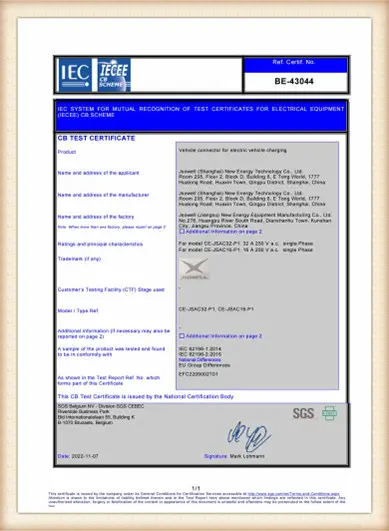
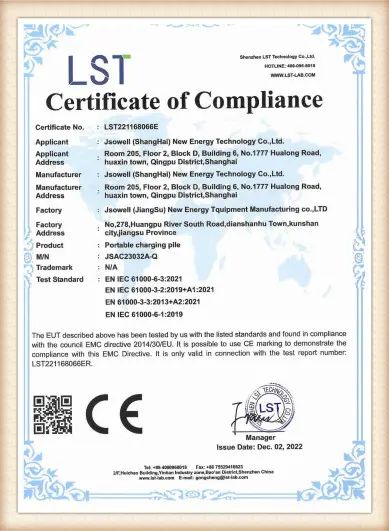
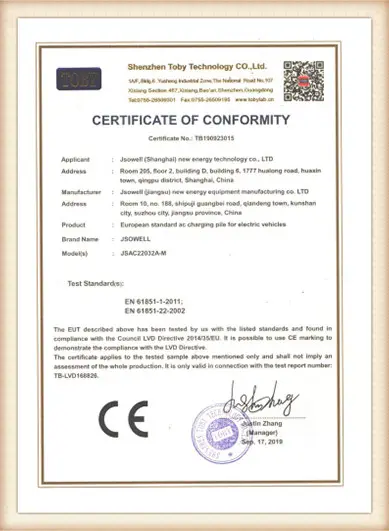
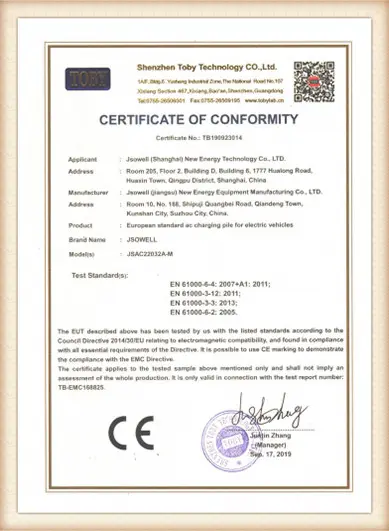
Fully licensed with comprehensive utility intertie certifications, CE compliance, CB schemes, UL listings, and over 50 registered industrial patents and software copyrights.
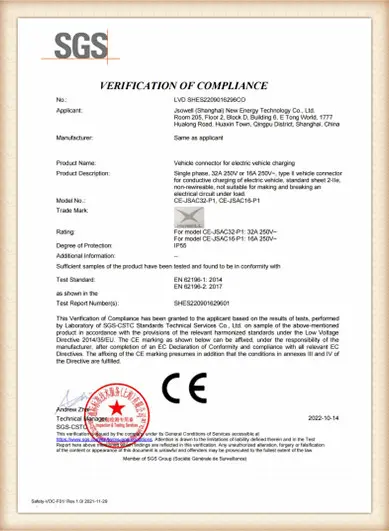
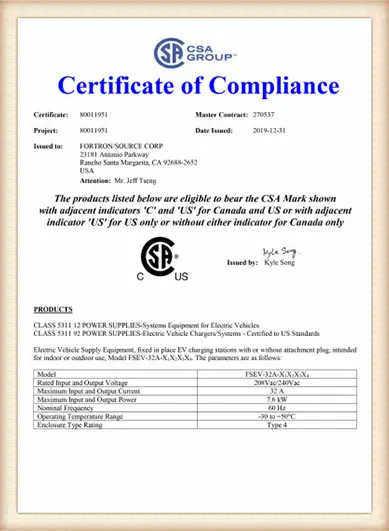
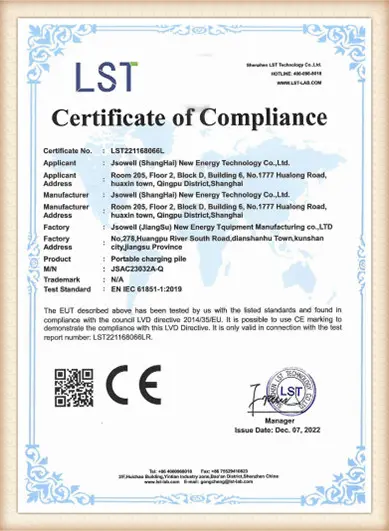
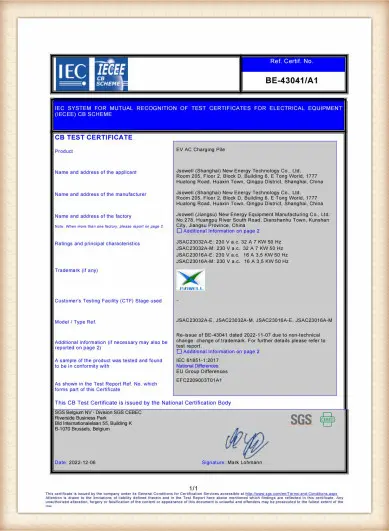
International Delivery Case Studies
Over 40 countries rely on HizonSun engineering to power critical transportation networks. Recent verifiable shipments demonstrate reliable cross-continental execution.
Thailand National Highway Network (180kW DC)
Commissioned 180kW DC fast charging systems across key trunk routes in Thailand, actively backing the Kingdom's strategic target of installing over 12,000 public chargers to accommodate expanding commercial EV fleets.
Northwest China High-Altitude Corridor (20 × 160kW)
Supplied 20 units of 160kW DC heavy-duty chargers across Gansu province. Engineered with wide operating temperature tolerance (-30°C to +55°C) and dual sandstorm filters to overcome harsh desert conditions.
Brazil Commercial Network Modernization (40 × CCS2 DC)
Exported 40 units of CE-compliant CCS2 DC fast charging stations to Brazilian fleet operators, pre-configured with multi-lingual user interfaces, localized payment gateways, and cellular remote telemetry.
Technology Roadmap & Next-Gen EVSE Frontiers
Anticipating the technological horizon: From wide-bandgap SiC power electronics to Megawatt Charging Systems (MCS) for commercial heavy logistics.
1000V Silicon Carbide (SiC) Conversion
As passenger and commercial EVs transition from 400V architectures to native 800V and 1000V platforms (such as Porsche Taycan, Hyundai E-GMP, and heavy commercial tractors), HizonSun is deploying next-generation Silicon Carbide power switching modules.
SiC semiconductors minimize thermal dissipation, elevate conversion efficiency above 96.5%, and enable broader constant-power output curves down to lower battery charge states.
Megawatt Charging Systems (MCS)
To address the rapid electrification of Class 8 heavy trucks, commercial maritime vessels, and e-buses, our R&D engineering lab is finalizing pilot MCS architectures capable of delivering up to 1.2MW via active liquid-cooled automated connectors.
This technology reduces commercial haul turnaround dwell times to under 30 minutes, revolutionizing long-haul freight economics and decarbonization.
AI Autonomous Grid Dispatch & V2G Synergy
Future charging stations will function as distributed energy assets. Our software roadmap incorporates edge AI algorithms that ingest real-time spot electricity market pricing, vehicle departure forecasts, and localized transformer load constraints.
This intelligence optimizes bidirectional power flow, enabling fleet operators to monetize aggregated battery capacity back to the regional transmission operator during severe grid events.
Frequently Asked Engineering & Commercial Questions
Direct engineering insight addressing compliance protocols, power balancing mechanics, lead times, and bespoke ODM customizations.
We manufacture EVSE conforming to European IEC (CCS2, Type 2), North American UL / SAE (CCS1, J1772, and SAE J3400 / NACS), and Chinese national GB/T standards. Our production lines can configure dual or multi-standard configurations (such as CCS2 + CHAdeMO or CCS1 + NACS) on identical cabinet platforms to cater to specific national import regulations.
Split-type systems (360kW–720kW) separate the high-voltage AC/DC conversion electronics into a central power cabinet placed away from traffic, routing DC power to slim user dispensers. This allows dynamic matrix power routing between 8 to 12 parking stalls, maximizing vehicle throughput, lowering bay footprint, and enabling easy single-module hot-swap maintenance without shutting down the entire station.
Our embedded firmware is tested and validated against prominent global EV charging management software (CPMS) suites, including Driivz, AMPECO, ChargeLab, and Greenlots. Supporting both OCPP 1.6-JSON and OCPP 2.0.1, we offer custom feature profile implementations including Core, Firmware Management, Smart Charging, Local Auth List Management, and Reservation profiles.
BESS-integrated charging piles (100kWh or 200kWh LFP) are recommended where local distribution grid interconnects cannot supply more than 30–50kW of continuous AC power, where utility upgrade quotes require months or years of permitting delay, or where local peak-to-off-peak electricity tariff spreads allow significant arbitrage savings via automated peak shaving.
Standard OEM branding (custom colorway, silkscreen logos, packaging, and digital UI display themes) typically requires an MOQ of 5 to 10 units for DC fast chargers, with standard lead times of 3 to 4 weeks. Complete mechanical ODM redesigns or specialized enclosure customizations require prototyping phases of 6 to 8 weeks prior to mass assembly.
The advertising screen system functions via an autonomous industrial Android multimedia controller separate from the EV charging micro-controller. Content is managed over 4G/Wi-Fi using common cloud CMS platforms. This guarantees that advertising media updates do not interfere with safety-critical EV charging communication loops, allowing operators to monetize visual impressions safely.
Advanced DC Fast & Megawatt Network Systems
Explore specialized split-type power modules, dual-gun octagonal fast chargers, and smart high-output commercial charging systems.



