
China Top 10 EV Charger Manufacturers for Global Buyers

Time:2026-10-16 Author:Henry
0%

Choosing an Ev Charger manufacturer is more complex than comparing prices on a product sheet. Global buyers must assess hardware quality, software stability, certifications, delivery capacity, and long-term technical support. A low quotation may hide higher installation or maintenance costs. That matters.

This guide introduces China’s top 10 EV charger manufacturers for international buyers. It focuses on companies serving residential, commercial, fleet, and public charging applications. Their product ranges may include 7 kW home chargers, 22 kW AC units, and high-power DC charging cabinets. Real-world details matter, such as cable temperature, screen visibility, connector durability, and performance in dusty parking areas. These factors can shape daily user experience.

Each manufacturer should be considered through verifiable evidence. Buyers can review factory experience, quality systems, testing procedures, export markets, warranty terms, and response times. Certifications and regional compliance also require careful checking before purchase. A supplier may have strong engineering teams but limited after-sales coverage in a distant market. Another may offer excellent software but fewer customization options. No ranking can fit every project.

The comparison also considers communication, private labeling, protocol compatibility, payment security, spare parts, and installation guidance. Evidence from technical documents, customer references, and factory audits is more useful than promotional claims. Buyers should confirm requirements with local experts. Even this approach has limits, because company capabilities and product portfolios change over time. Careful verification remains essential before signing a contract or placing a large order.
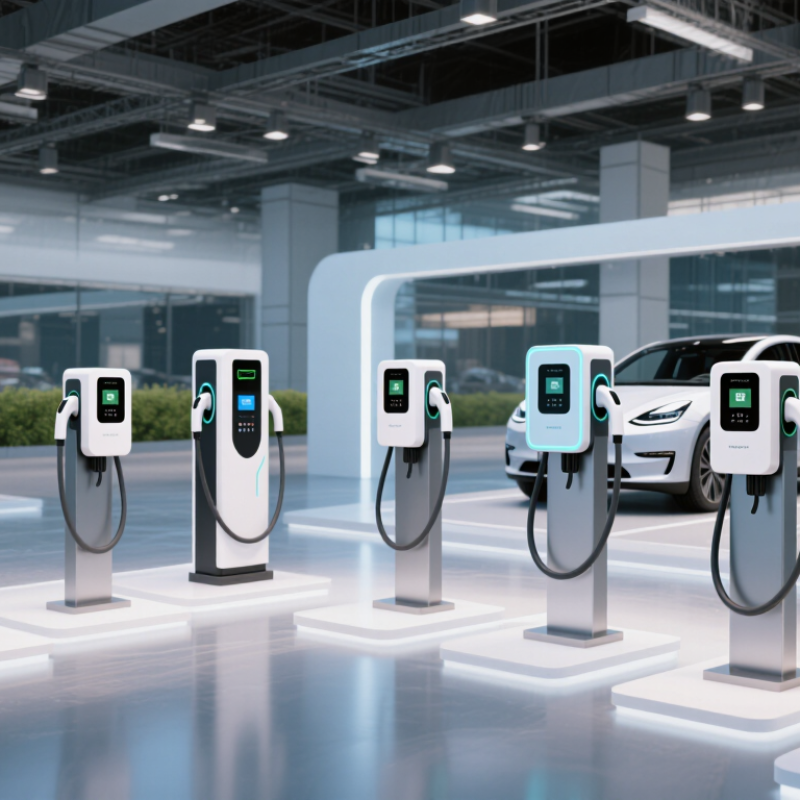
China Top 10 EV Charger Manufacturers for Global Buyers

EV Charger Market Overview: Why China Is a Global Manufacturing Hub

China Top 10 EV Charger Manufacturers for Global Buyers

China has become a major EV charger manufacturing hub through scale, speed, and supplier density. The IEA Global EV Outlook 2024 reports that China represented over 60% of global electric car sales in 2023. It also held nearly two-thirds of the world’s public charging points. This demand gives manufacturers practical experience with busy highways, apartment parking, and extreme weather.

The supply chain is unusually close. Power modules, contactors, cables, molded housings, displays, and payment components can often be sourced within one industrial region. That shortens development cycles and reduces tooling delays. Manufacturers can produce 7 kW AC units for homes and high-power DC systems for commercial fleets. The China Electric Vehicle Charging Infrastructure Promotion Alliance recorded more than 2.7 million public charging points in China by the end of 2023. Real installations expose weak thermal designs quickly.

The scale is real. But scale is not quality. Global buyers should review IEC or applicable national test reports, EMC results, IP ratings, thermal-cycle records, and OCPP compatibility. TÜV Rheinland’s 2024 charging infrastructure guidance also stresses cybersecurity, interoperability, and lifecycle testing. Factory audits matter because component substitutions can occur after approval. The IEA notes that charging deployment still varies widely by region, so overseas performance cannot be assumed from domestic volume alone. A reliable supplier should provide traceable serial numbers, spare-part planning, firmware control, and clear warranty procedures. Some factories communicate confidently, yet their field data remains thin. That gap deserves careful questioning.

Key Criteria for Evaluating China’s EV Charger Manufacturers

When evaluating China’s EV charger manufacturers, look beyond rated power and attractive pricing. Request factory test records, independent laboratory reports, and clear compliance documents for your target market. Check whether the certificates match the exact model, connector, voltage range, and software version you will purchase.

Ask for practical evidence. Can the charger maintain stable output during repeated 30-minute sessions? Does it recover safely after a communication failure? Inspect enclosure sealing, cable flexibility, emergency-stop access, and thermal protection. An IP rating helps, but installation quality matters too. Request sample units before placing a large order. Field testing often reveals faults that brochures hide.

Software and service deserve equal attention. Confirm support for open communication protocols, remote diagnostics, user authorization, and firmware updates. Ask how quickly engineers respond when a charger stops reporting data at midnight. Review warranty terms, spare-parts availability, packaging strength, and documented production capacity. A factory audit can confirm whether testing is performed consistently or only displayed for visitors. Do not rely on one successful sample. Batch variation happens. I have seen excellent prototypes followed by inconsistent cable assemblies, so inspection before shipment remains important. Price should include installation risks, downtime, freight damage, and long-term maintenance, not only the unit quotation.

Profiles of the Top 10 China EV Charger Manufacturers

China’s EV charging industry now serves a huge and demanding market. The International Energy Agency’s Global EV Outlook 2024 estimates that China held over half of the world’s public charging points in 2023. This scale gives local manufacturers practical experience with dense cities, long-distance routes, extreme weather, and heavy daily utilization.

Profiles of the top 10 China EV charger manufacturers show clear specialization. Several focus on high-power DC systems for highways and fleet depots. Others develop compact AC chargers for apartments, offices, and hotels. Some concentrate on liquid-cooled charging cabinets, while others provide payment software, load balancing, and remote maintenance. A few manufacturers serve overseas distributors with modular products, multilingual interfaces, and region-specific grid settings. Their strongest qualities are usually factory automation, testing capacity, and fast component sourcing. However, a polished enclosure does not prove long-term reliability.

The China Electric Vehicle Charging Infrastructure Promotion Alliance continues to track rapid expansion in public infrastructure and equipment deployment. Buyers should examine independent safety tests, thermal performance, spare-part availability, and field failure rates. Ask for evidence from comparable climates. A charger operating beside a humid coastal road faces different risks from one installed in a cold inland depot. Certification documents matter, but installation records matter too. Some supplier claims remain difficult to verify. That is where careful audits, sample testing, and transparent service agreements become essential for global buyers.

Product Types, Charging Standards, and Global Certifications

For global buyers, China’s top EV charger manufacturers should be judged by product fit, not catalog size. Common options include portable AC chargers, wall-mounted AC units, commercial stations, and high-power DC chargers. AC units suit homes and offices, while DC systems serve highways and fleet depots. Fast charging is useful. It also demands stronger grid capacity, thermal control, and maintenance planning.

Charging standards can decide whether a project works. IEC 61851 covers charging communication and safety requirements. IEC 62196 defines plugs and socket outlets. ISO 15118 supports advanced vehicle-to-charger communication, including smart charging functions. OCPP can help operators manage equipment from different suppliers. However, compatibility is never guaranteed by one label. Buyers should test the exact vehicle, connector, voltage, and software combination.

Global certifications need careful checking. CE marking may support access to European markets, while UKCA can apply in the United Kingdom. UL-related certification is often requested in North America. EMC, electrical safety, ingress protection, and cable temperature tests also matter. Ask for current certificates, test reports, factory quality records, and traceable component information. Verify whether documents cover the specific model. A certificate for a similar unit is not enough. Field inspections often reveal small weaknesses, such as unclear wiring labels or slow firmware updates. These details seem minor. They are not.

EV Charger Product-Type Benchmark for Global Buyers

The chart compares representative maximum output levels across major EV charger categories. AC Level 1 and AC Level 2 are commonly used for residential and destination charging, while DC fast charging supports commercial and public charging networks. The Megawatt Charging System (MCS) value represents the commonly referenced 3.75 MW target for future heavy-duty vehicle charging.

When evaluating suppliers, buyers should also verify compatibility with IEC 61851, IEC 62196, CCS, CHAdeMO, GB/T, or NACS requirements, as well as market-specific certifications such as CE, UKCA, UL 2202, UL 2231, and applicable ISO 15118 functions. Actual output depends on vehicle limits, grid capacity, connector design, and regional regulations.

How Global Buyers Can Compare Suppliers and Choose the Right Partner

Global buyers comparing China’s top ten EV charger manufacturers should start with evidence, not catalog size. The IEA’s Global EV Outlook 2024 reports that China represented about 60% of global electric car sales in 2023. Its 2025 edition records more than 5 million public charging points worldwide at the end of 2024. That scale shows manufacturing depth, but not dependable export support. Numbers matter. Ask suppliers for audited capacity, failure rates, test reports, and installation references from similar climates.

Technical fit should be checked line by line. Confirm IEC 61851 and IEC 62196 compliance, plus market-specific certification requirements. For connected chargers, test OCPP compatibility, remote diagnostics, payment integration, and software update controls before signing. A live sample is more revealing than a polished video. Measure cable temperature, connector locking, output stability, and recovery after communication loss. Review ingress protection, thermal management, spare-part access, and warranty response times.

Commercial comparison needs a total-cost model. Include freight, installation, grid upgrades, backend fees, maintenance labor, and replacement modules. Request staged purchasing and factory acceptance testing. Supplier audits should cover calibration records and worker training, not only factory photographs. I still see buyers overvalue the lowest unit price. That choice can age badly. Field data may be incomplete, too. A documented pilot and clear escalation contacts often reveal whether a manufacturer is a partner or merely an exporter.

FAQS

How should buyers evaluate an EV charger manufacturer?

Look beyond price and rated power. Request factory test records, independent reports, and market-specific compliance documents. Verify the exact model, connector, voltage range, and software version. A polished brochure proves little.

Why are sample units important before a large order?

Samples can reveal faults hidden by product literature. Test repeated 30-minute charging sessions and inspect output stability. Check cable flexibility, enclosure sealing, and emergency-stop access. One successful sample is not enough.

What should buyers test during practical field trials?

Test charging under realistic heat, humidity, and daily usage. Check thermal protection and recovery after communication failures. Watch for unclear wiring labels or slow firmware updates. Small details matter.

Which charger type suits homes, offices, highways, and fleets?

AC chargers usually suit homes, offices, apartments, and hotels. High-power DC chargers fit highways and fleet depots. Fast charging needs stronger grid capacity and careful thermal planning. Faster is not always better.

How can buyers confirm compatibility with vehicles and software?

Test the exact vehicle, connector, voltage, and software combination. Do not rely on one standard label. Confirm communication, user authorization, remote diagnostics, and firmware updates. Compatibility claims can remain incomplete.

What certification documents should international buyers request?

Request current safety, electrical, EMC, and ingress-protection documents. Confirm that every certificate covers the purchased model. Similar-unit certificates may not apply. Verify traceable components and test records.

How should software and technical support be assessed?

Ask how engineers respond when a charger stops reporting data overnight. Review remote maintenance procedures and update controls. Confirm open communication support and clear escalation steps. Service promises need evidence.

What should be included in the total purchase cost?

Include installation risks, freight damage, downtime, spare parts, and long-term maintenance. Review warranty limits and packaging strength. Factory audits can confirm production consistency. I would still inspect every batch.

Conclusion

China has become a major manufacturing hub for Ev Charger products because of its extensive industrial supply chain, engineering capabilities, cost efficiency, and ability to support large-scale customization. This article presents an objective overview of the Chinese EV charging market and explains the key factors global buyers should consider, including product quality, production capacity, technical support, delivery reliability, pricing, and after-sales service.

It also introduces ten leading types of Chinese manufacturers without focusing on brand names, covering their strengths, product ranges, and typical application scenarios. Readers will learn about AC and DC chargers, charging power levels, communication features, safety systems, and important charging standards and international certifications. The final section provides a practical framework for comparing suppliers, assessing factory qualifications, confirming compliance requirements, reviewing testing procedures, and selecting a reliable long-term manufacturing partner for different markets and project needs.

Henry

Henry

Henry is a dedicated marketing professional with a profound expertise in the company's offerings. With years of experience in the industry, he possesses an impressive understanding of the market dynamics and consumer behaviors that drive success. Henry is committed to sharing his insights through......
HizonSun certificate enlarged view